
October 5, 2026
“A remarkable (and about time!) recognition of fundamental research into light–matter interactions, work that has helped transform how we study and influence biology using light.
Understanding how light interacts with biomolecules has given us tools to observe biological changes, control gene expression and develop new therapies. It also leaves us with plenty of questions about how living systems produce light and respond to it.
The next frontier will be to leverage classical and quantum optics to investigate how living systems emit light and how light interacts with other biomolecular and biophysical processes.” –Nirosha J. Murugan, Tier II Canada Research Chair & Assistant Professor
PRESS RELEASE
Press contact: Pernilla Witte, +46-8-524 86 107, pernilla.witte@nobelprizemedicine.org or Thomas Perlmann,
Light-seeking algae gave us a switch for nerve cells
thomas.perlmann@nobelprizemedicine.org, Secretary-General, The Nobel Assembly at Karolinska Institutet.
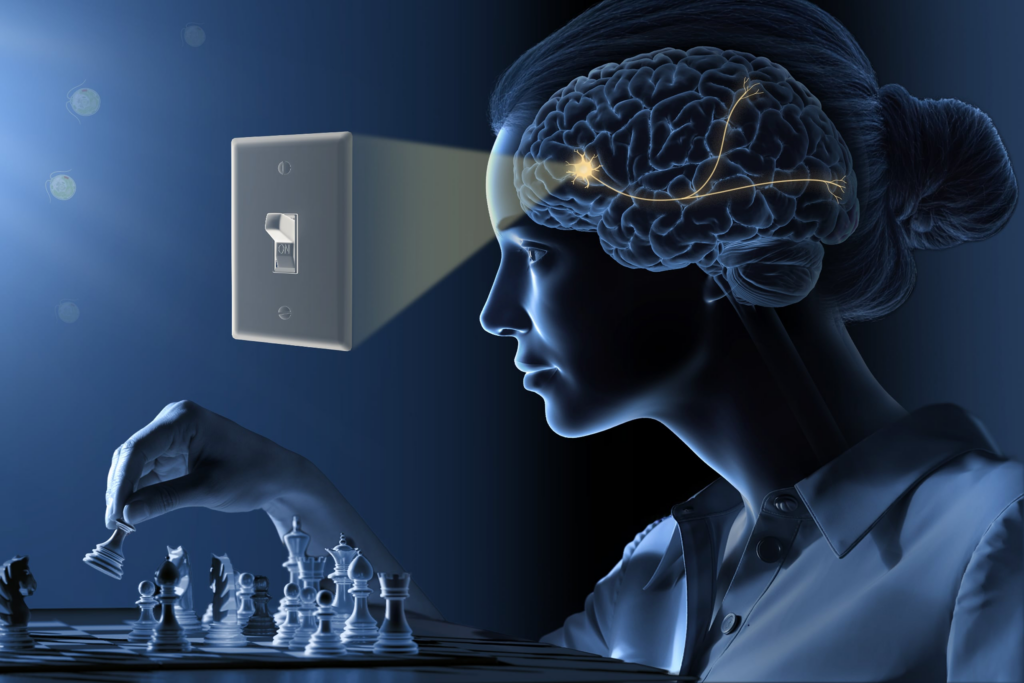
The Nobel Prize in Physiology or Medicine 2026 is awarded for optogenetics — a method that makes it possible to show how nerve cells shape memories, feelings and behaviours in the living brain. Peter Hegemann and Georg Nagel discovered a remarkable protein, channelrhodopsin, in a single-celled alga. Karl Deisseroth transformed the protein into a light-controlled switch for nerve cells. The Laureates have laid the foundation of a new era in neuroscience.
Congratulations Karl Deisseroth , Peter Hegemann & @GeorgNagel!
Press Release (English): https://www.nobelprize.org/uploads/2026/10/press-medicineprize2026.pdf
Press Release (Swedish): https://www.nobelprize.org/uploads/2026/10/press-medicineprize2026-swedish.pdf
CCCRdg Notes:
The coherence level of the light speed communication frequencies delivered through our every opto-electrical signaling exchange determines the resonant outcomes of our corresponding particle pair expression.
Through quantum coherence, we optimize the state-space for maximum computational harmony. 🌞☯️⚡️♾️